
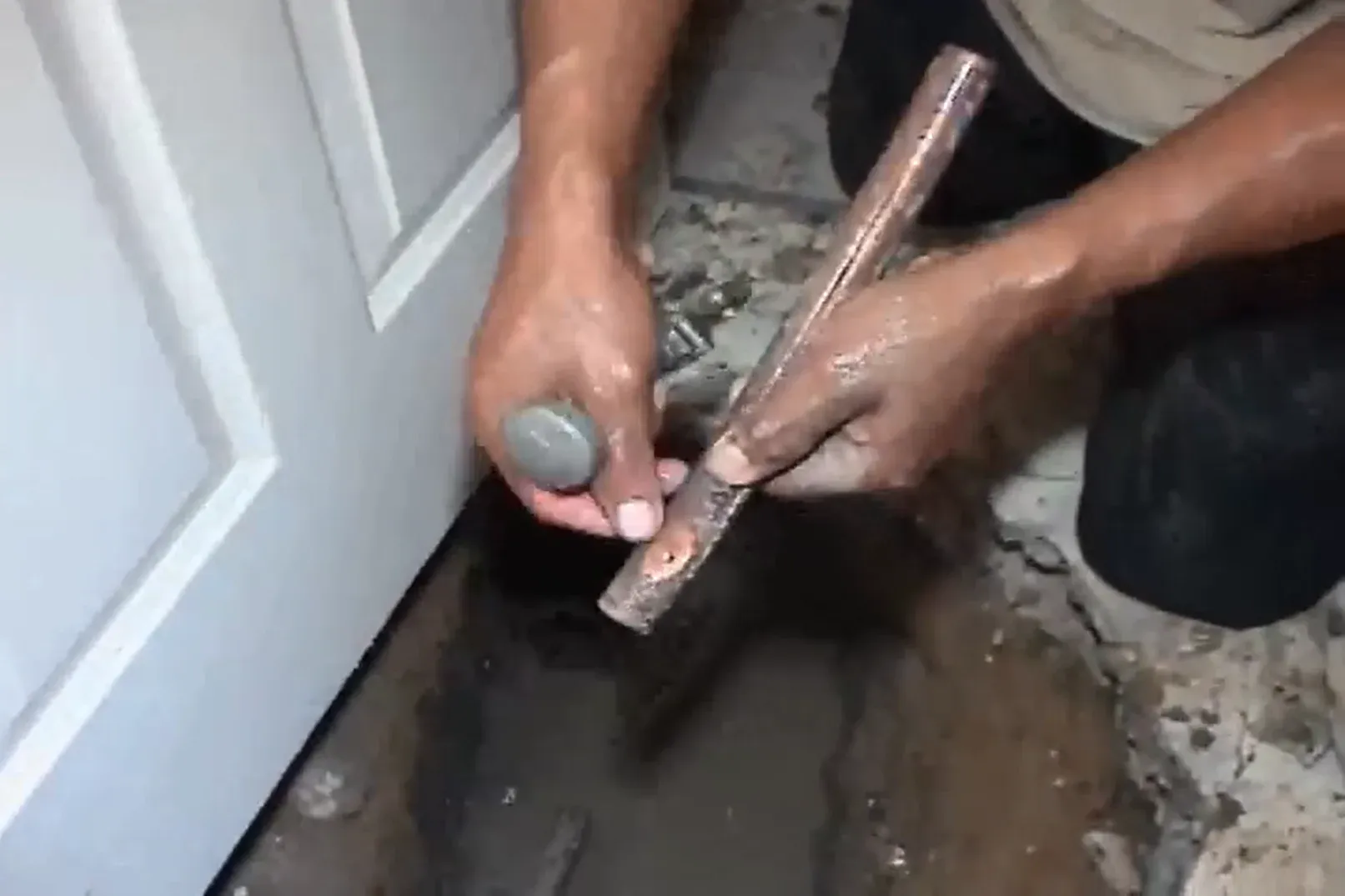
A slab leak happens when a water line running beneath your concrete foundation develops a hole, crack or failed joint. The pipe does not usually fail overnight. It is worn down over time by a few specific forces, and in Prescott some of those forces are stronger than average. Here is what actually causes these leaks.
The main causes of slab leaks
Corrosion
This is the most common cause in older homes. Copper pipes corrode from the inside out over the years, especially where water chemistry is aggressive. Eventually corrosion eats through the pipe wall and creates a pinhole leak. The corroded copper in the photo above is a textbook example.
Abrasion
Pipes expand and contract as hot and cold water move through them. If a line rubs against the concrete, rebar or gravel around it every time it shifts, that friction slowly wears a hole in the pipe. Hot-water lines, which expand more, are especially prone to abrasion.
High water pressure
Water pressure that is too high stresses every pipe, joint and fitting in the home. Over time it accelerates both corrosion and abrasion and can cause a weak point to give way. A pressure regulator set to a safe range is one of the best protections.
Poor installation or low-quality pipe
Kinked lines, bad joints, or thin or defective pipe installed when the home was built can all shorten a pipe's life and lead to an early slab leak.
Soil movement
The ground under a slab is not perfectly stable. Expansive or shifting soils swell and contract with moisture and temperature, putting stress on the slab and the pipes running through it. Enough movement can crack a line or a joint.
Why slab leaks are common in Prescott
Several local factors stack up to make under-slab leaks more likely in the Prescott area:
- Hard water. Prescott's water is on the harder side. Its mineral content and chemistry accelerate the internal corrosion and scaling that weaken copper pipes over the years.
- Aging copper. Many Prescott homes were plumbed with copper supply lines that are now decades old and reaching the end of their service life.
- High-desert temperature swings. Prescott's sizable day-to-night and seasonal swings, including winter freeze-thaw cycles, expand and contract pipes and stress joints.
- Soil conditions. Local soils can move with moisture and temperature, adding stress to slabs and the lines beneath them.
None of this means a leak is inevitable, but it does mean Prescott homeowners, especially in older homes, should take the warning signs seriously.
Can you prevent slab leaks?
You cannot guarantee a pipe will never fail, but you can meaningfully lower the risk:
- Install or check a pressure regulator and keep household pressure in a safe range.
- Address hard water with treatment or softening to slow corrosion.
- Fix small leaks and drips promptly instead of letting them linger.
- Have aging copper inspected, and consider a repipe if it keeps failing.
Worried about your pipes?
If your home is older or you have already had one leak, it is worth a professional look. Call (928) 470-4470 and we will assess the condition of your lines and find any leak before it causes damage.